
Bangladesh J-10 Deal: Why Dhaka Chose China's Jets
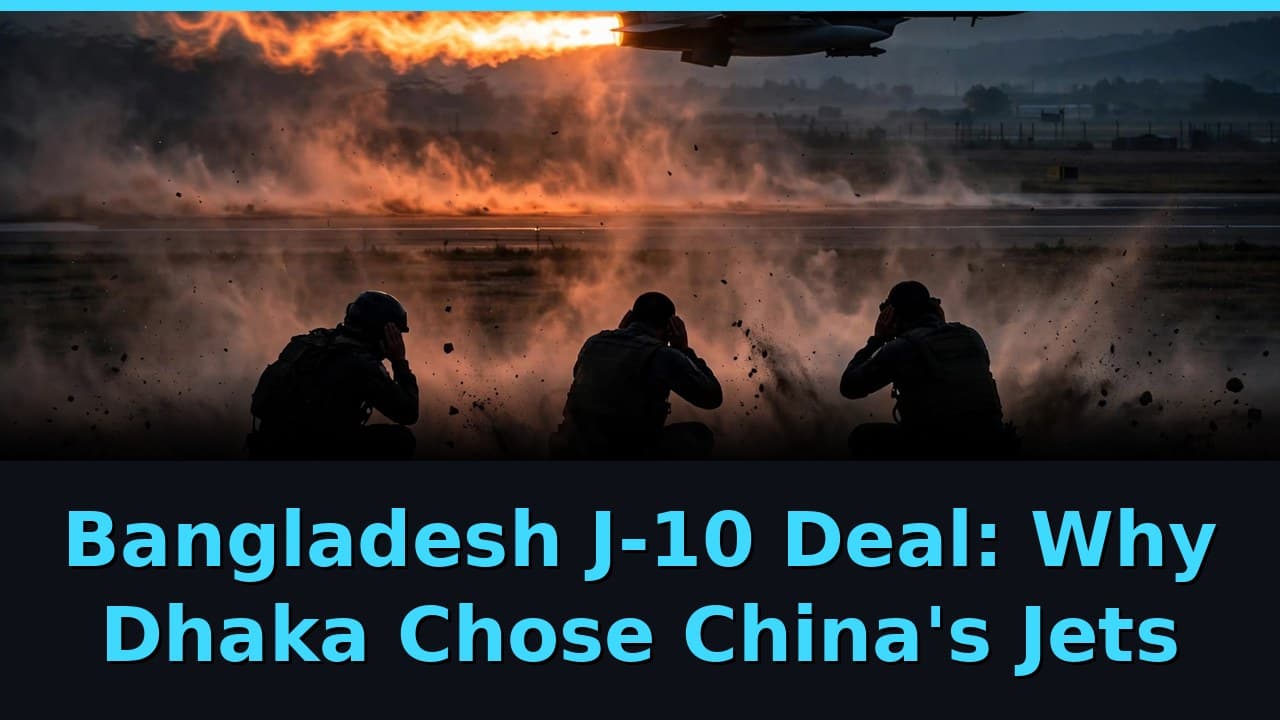
Bangladesh has officially confirmed a long-anticipated deal to purchase Chinese J-10CE fighter jets, pointing to the aircraft's combat record in last year's India-Pakistan conflict as a key reason for the choice.
Zahed Ur Rahman, adviser for information and broadcasting to Bangladesh's prime minister, said a draft proposal for the procurement has been submitted to the Ministry of Finance and the Armed Forces Division for final clearance.
Why Bangladesh chose the J-10 deal
Bangladeshi officials have been unusually open about their reasoning. Rahman said the country had "paid attention" to the brief conflict between India and Pakistan in May 2025, during which Pakistan reportedly deployed J-10CE fighters fitted with advanced AESA radars and PL-15 long-range air-to-air missiles against Indian Rafale jets.
"Compared with Rafales of similar quality, or European variants such as the Eurofighter Typhoon, the price of Chinese fighter jets is comparatively much lower," Rahman said at a press briefing. "But I repeat, it performed better in head-on combat."
The J-10CE is the export version of China's Chengdu J-10C, a single-engine multirole combat aircraft. It boasts a top speed of Mach 1.8 and can carry a range of air-to-air and air-to-ground weapons. Chinese analysts describe it as the most cost-effective option among medium-weight fighters, with radar-absorbing coatings giving it a degree of semi-stealth capability.
Bigger Than Just Jets
The draft proposal goes beyond fighter aircraft. According to Bangladesh's Press Information Department, it also covers Chinese attack helicopters, VIP transport helicopters, and unmanned aerial vehicle systems — a broad modernization package for the country's air capabilities.
The procurement is planned for the current fiscal year, which runs from July to June, subject to budgetary allocation. If funding is not secured in time, it will roll over into the next budget cycle.
Some reports put the potential value of the fighter deal at around $2.3 billion for more than 20 aircraft, with China offering payment spread over ten years — though the final contract has yet to be signed.
A Shifting Market
The deal is being watched closely as a sign of shifting perceptions of Chinese military hardware. For decades, Western and Russian jets dominated the export fighter market, but the reported combat performance of the J-10CE has given Beijing a powerful selling point in Asia and beyond.
It also deepens defense ties between Dhaka and Beijing at a sensitive moment for South Asian geopolitics, coming as regional air forces reassess their fleets. Earlier this year, Pakistan and Bangladesh's air chiefs also discussed potential procurement of JF-17 Thunder aircraft, the jointly developed Pakistan-China fighter.
How the region is reacting to the Bangladesh J-10 deal
The announcement is certain to draw attention in New Delhi, where the reported losses of Rafale jets during the 2025 conflict remain a sensitive subject. India has invested heavily in its French-built Rafale fleet as the centerpiece of its air power, and the prospect of a neighboring country fielding the very aircraft credited with challenging those jets changes the regional equation.
For Beijing, the sale is about more than one contract. Aggressive financing — including the reported ten-year installment plan — signals that China intends to compete directly with established exporters like the United States, France, and South Korea for the next generation of fighter deals across Asia, Africa, and the Middle East. Defense analysts say that if the Bangladesh deal closes smoothly, several other countries weighing fleet renewals could follow.
For more on Asia's biggest defense and political stories, check our trending world news section, and visit the NovelNama homepage for today's top updates.
What to Watch
The immediate question is whether Bangladesh's finance ministry clears the budget in this fiscal cycle. Beyond that, watch for the final contract signing, delivery timelines, and whether other countries in the region follow Dhaka's lead in turning to Chinese fighters.


Mazeed Parhein

Ishq Murshid Drama Cast: Kaun Kaun Hai? 7 Shandaar Kirdar
Tere Bin Drama Cast — Kaun Kaun Hai, Kya Hai Unka Kirdar?
Jaan Nisar Drama Story: Aakhri Raaz Jo Aapko Hairaan Kar Denge

Akhara Drama Story
انتقام، غیرت اور اکھاڑے کا سچ

Spain Unbeaten Run Record Football: La Roja ka 39-match raaz