
Nepal-Tibet Flood Death Toll: 750 Dead, Thousands Missing
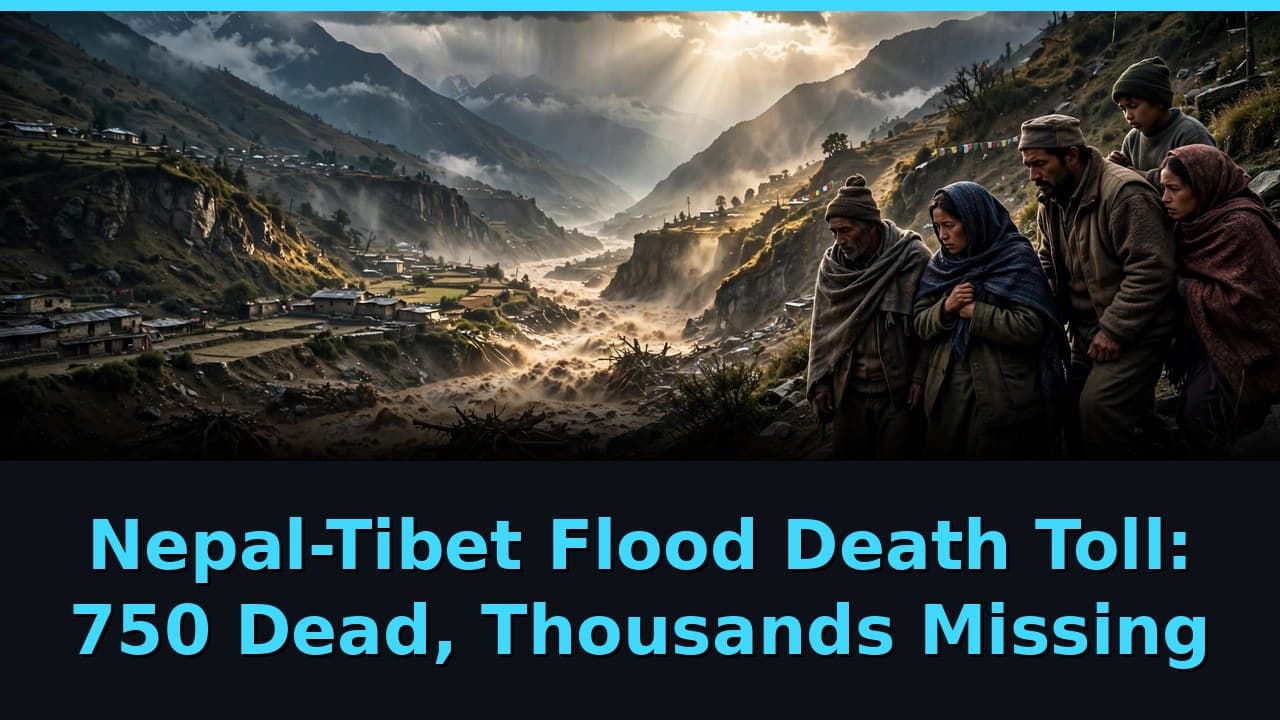
At least 750 people are dead and more than 3,000 remain missing after catastrophic floods tore through the Nepal-Tibet border region, pushing the Nepal-Tibet flood death toll into one of the deadliest mountain disasters the Himalayas have seen in years.
The disaster began when part of a glacier collapsed high in the Langtang Himal range, more than 5,000 meters above sea level. The collapse triggered a landslide that unleashed a wall of water, ice, mud, and rock down the Bhote Koshi River valley, traveling over 170 kilometers and flattening riverside settlements within minutes.
A valley devastated as the Nepal-Tibet flood death toll climbs
Nepal's Rasuwa district suffered the worst of it. Villages including Timure and Syapru Besi were among the hardest hit, and floodwaters pushed further downstream into parts of Nuwakot and Dhading districts. Nepal's disaster authority reports 734 dead, 2,498 missing, and 7,514 rescued on its side of the border.
On the Chinese side, officials in Tibet's Gyirong County reported 16 dead and 546 missing. Among the 261 foreign nationals from 23 countries unaccounted for on the Tibetan side were citizens of Nepal, India, Latvia, the United States, and Britain — a reminder of how many trekkers, workers, and travelers pass through the region.
The Red Cross estimates that more than 90,000 people have been affected by the disaster overall.
Rescue against the elements as the death toll rises
Search and rescue teams are fighting brutal conditions. Heavy rain has repeatedly swollen river levels, forcing crews to pull back to higher ground. A lake that formed behind a mudslide dam near the Gyirong border crossing began overflowing, raising fears of a second wave of flooding before officials judged the immediate threat manageable.
Nepal's rescue effort is now focused on hundreds of people believed to be trapped in tunnels at hydropower plants, after the torrent of ice, rock, and debris crashed through the facilities along the river. Nepal's missing list includes 933 workers from hydropower projects in the valley.
China's Foreign Minister Wang Yi described the mudslide as the "most severe cross-border disaster" in recent years in a call with his Nepalese counterpart, calling the rescue operations unprecedented in their difficulty. Beijing and Kathmandu are now working together to identify the missing and strengthen cooperation on disaster prevention.
A Warning Written in Ice
Scientists have warned for years that the Himalayas are warming faster than the global average, and that glacial lakes and unstable ice formations pose a growing threat to the millions who live downstream. China has explicitly linked this disaster to the effects of climate change.
The Bhote Koshi valley is a vital corridor. It carries trade between Nepal and Tibet, hosts a chain of hydropower plants that feed Nepal's electricity grid, and draws trekkers from around the world heading toward Langtang. All three lifelines — commerce, power, and tourism — have been severed at once, and rebuilding will take months if not years.
Hospitals in Kathmandu have become focal points in the search for the missing, as families gather hoping for news. The Nepalese Tourism Board said hundreds of foreign citizens have been rescued, but hundreds more tourists remain unaccounted for, turning consulates across the region into crisis centers.
For more on major global events as they unfold, follow our trending world news section, and check the NovelNama homepage for the day's top stories.
What to Watch
Attention is now on the weather: any further heavy rainfall could trigger new flooding from the unstable mudslide lake. Authorities are also racing to account for the hundreds of missing hydropower workers, while questions grow about glacier safety across the Himalayas as warming temperatures destabilize ice formations that have stood for centuries. International aid agencies are now mobilizing relief for the displaced, with shelter, clean water, and medical care the most urgent needs.


Mazeed Parhein

Ishq Murshid Drama Cast: Kaun Kaun Hai? 7 Shandaar Kirdar

Tere Bin Drama Cast — Kaun Kaun Hai, Kya Hai Unka Kirdar?

Jaan Nisar Drama Story: Aakhri Raaz Jo Aapko Hairaan Kar Denge

Akhara Drama Story
انتقام، غیرت اور اکھاڑے کا سچ

Spain Unbeaten Run Record Football: La Roja ka 39-match raaz