
Venezuela-US Oil Deal: 25-Year Pact, 17 Oilfields — Why Now?
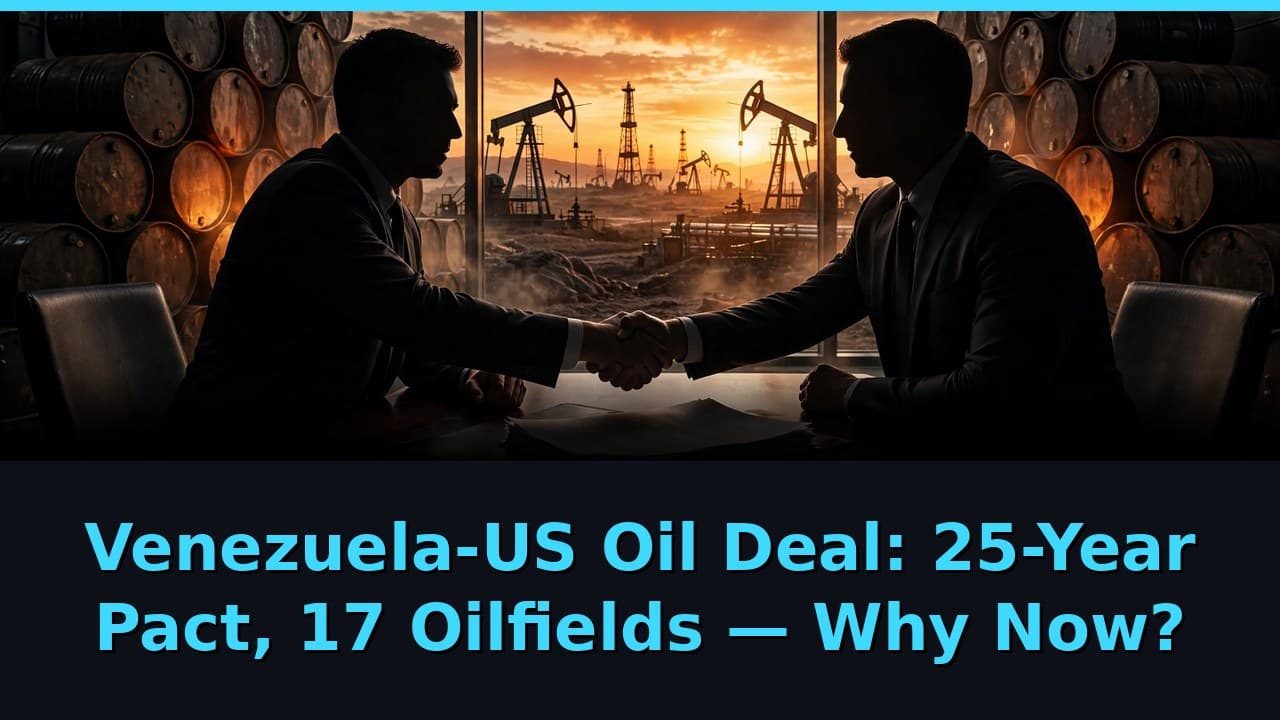
Venezuela's interim President Delcy Rodriguez has announced a 25-year oil deal with the US, a landmark agreement she described as "historic" that could reshape the South American nation's battered oil industry.
In a late-night address on state broadcaster VTV, Rodriguez said the bilateral project would develop 17 strategic oilfields with a production target of more than 1.5 million barrels per day, while preserving the country's sovereignty over its natural resources.
The Venezuela-US oil deal in detail
"This 25-year bilateral project envisages the development of 17 strategic oilfields with a production target of more than 1.5 million barrels per day," Rodriguez said, stressing that the figure related solely to the agreement between Venezuela and the United States.
She added that the 1.5 million barrel target was only an initial goal. The wider expansion plan also includes the development of eight greenfield oil blocks as part of a broader revival of the country's energy sector.
The announcement followed President Donald Trump's own reveal a day earlier that the United States would take partial control of Venezuela's vast oil reserves. Trump said American companies could help revive the industry while providing a new source of crude to help lower fuel prices for American consumers. He offered few specifics, saying only that the US had secured majority control of more than 65 billion barrels of Venezuelan proven reserves through a partnership with private business.
A Long and Rocky History
American and Venezuelan oil ties go back a century, but the relationship fractured as Venezuela nationalized its industry and Washington imposed waves of sanctions. At its peak, Venezuela produced over 3 million barrels per day; today's output is barely a third of that. Refineries have rusted, skilled workers have emigrated, and infrastructure has decayed.
That history is why analysts are cautious. Rebuilding will require not just money but years of technical work — repairing wells, pipelines, and export terminals. The 25-year timeframe of the deal reflects that reality: this is a generational project, not a quick fix.
What It Could Be Worth
Rodriguez put a striking number on the agreement: about $209 billion in revenue for the Venezuelan state, calculated at a benchmark oil price of $65 per barrel. She acknowledged that crude prices fluctuate, but framed the deal as the foundation for the country's economic future.
The stakes are enormous because Venezuela's oil industry has collapsed so far. The country sits on the world's largest proven oil reserves, yet produces only around 1.25 million barrels per day — a fraction of its potential — after years of underinvestment, mismanagement, and sanctions. Reviving output to 1.5 million barrels daily under this deal alone would be a significant turnaround.
Why the Venezuela-US oil deal matters
The agreement marks one of the most dramatic shifts in US-Venezuela relations in decades. For Washington, it promises a new nearby source of crude at a time of global energy volatility. For Caracas, it offers the capital, technology, and market access needed to rebuild an industry that once made Venezuela one of the world's richest oil exporters.
Questions remain, including how the partnership will be structured, which American companies will participate, and how the revenue will actually flow. But both governments are presenting it as a win: Trump gets cheaper fuel leverage, and Rodriguez gets what she called a project that will "shape the country's future."
For more on the world's biggest economic and political stories, visit our trending world news section, and see the NovelNama homepage for today's top updates.
What to Watch
Watch for the names of the private companies involved, the first production timelines from the 17 oilfields, and how oil markets react as details emerge. The real test will be whether crude actually starts flowing at the promised volumes — Venezuela has announced grand energy plans before.


Mazeed Parhein

Ishq Murshid Drama Cast: Kaun Kaun Hai? 7 Shandaar Kirdar

Tere Bin Drama Cast — Kaun Kaun Hai, Kya Hai Unka Kirdar?

Jaan Nisar Drama Story: Aakhri Raaz Jo Aapko Hairaan Kar Denge

Akhara Drama Story
انتقام، غیرت اور اکھاڑے کا سچ

Spain Unbeaten Run Record Football: La Roja ka 39-match raaz